BREAKING – The Memorial Hospital of Sweetwater County Board has issued a letter in response to the one issued by the Sweetwater County Board of County Commissioners.
Scroll down to read the County Commissioner’s letter as well as the Hospital Board’s response.
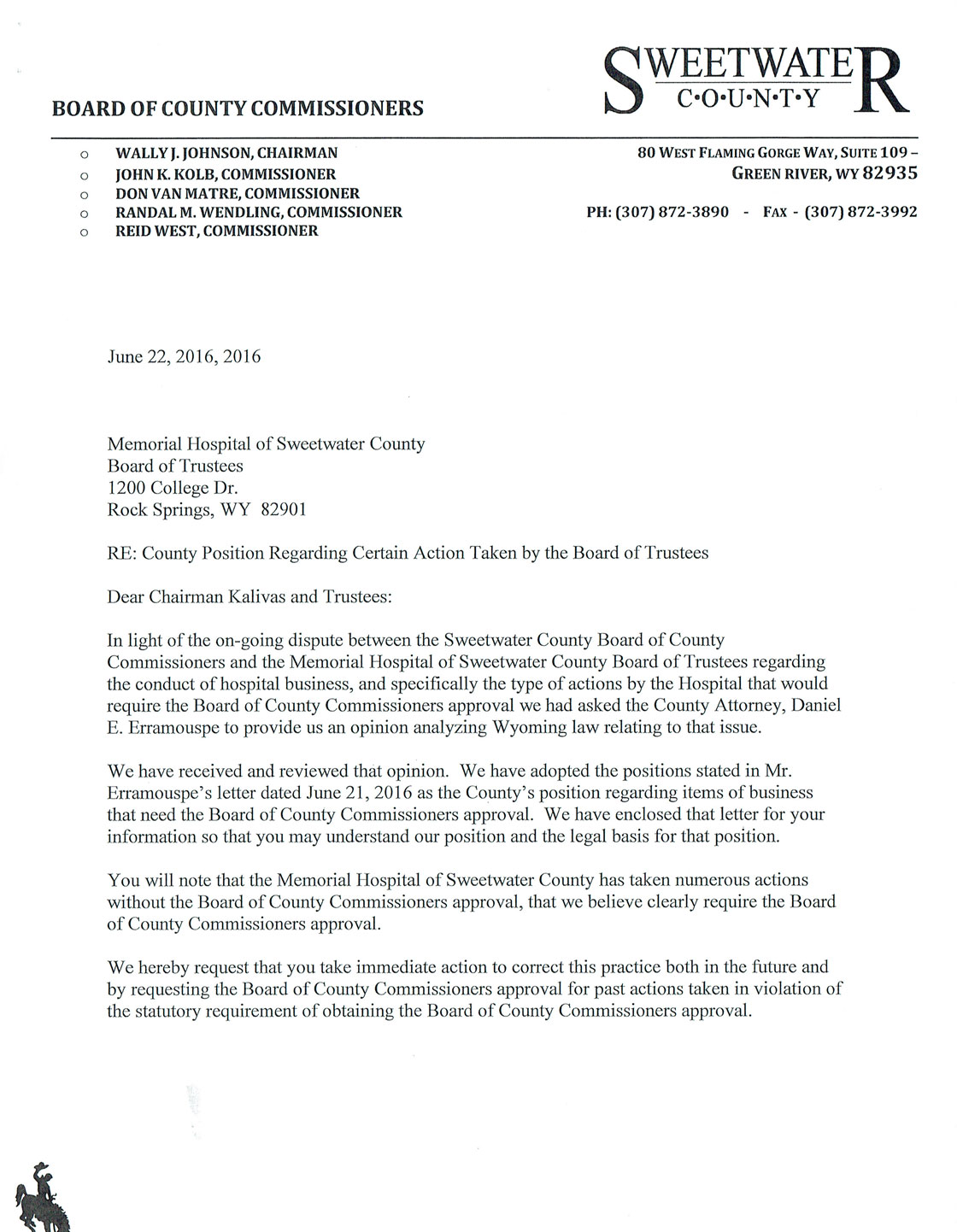
SWEETWATER COUNTY — The Sweetwater Board of County Commissioners has issued an official letter objecting to the way Memorial Hospital of Sweetwater County conducts business.
The letter spells out objections to their board meetings, the lack of an annual report to the County Commissioners and MHSC entering into agreements without the approval of the County Commissioners.
The commission sent the formal letter drafted by County Attorney Daniel Erramouspe to Memorial Hospital of Sweetwater County.
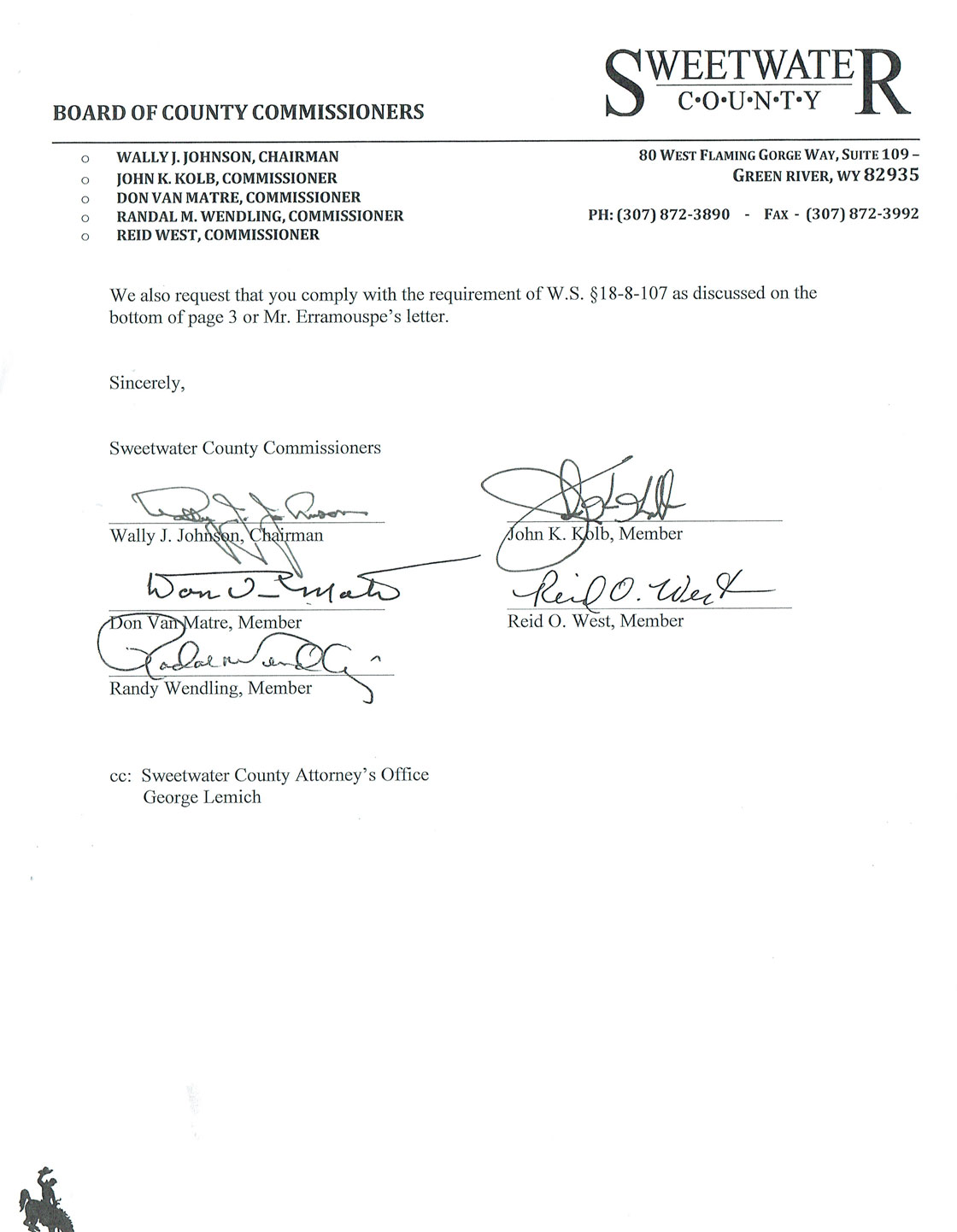
The letter states that the hospital board should take immediate action to correct ongoing practices that the commissioners feel are out of line with state statutes along with submitting a request for retroactive approval of several past actions.
The letter cites Wyoming State Statute as the basis for the demand, specifically W.S. 18-8-108.
The County Attorney’s interpretation of the statute would require the commission to sign off on several issues, including, the employment contract of MHSC Chief Executive Officer Gerry Klein, the affiliations between University of Utah Health Care and MHSC and the affiliation between High Desert Rural Health Care District in Wamsutter with MHSC.
Additionally, the commissioners want the deed for the newly acquired College Hill Health Center to be transferred to Sweetwater County. The transfer would be based on statute language that requires that memorial/county hospitals reside on land that is either county owned or leased to the county for 99 years.
According to the letter on March 8th, 2016 a meeting between MHSC attorney George Lemich, County Attorney Daniel E Erramouspe, and attorney James Schgermetzler took place to discuss the College Hill Health Center and other issues.
According to the letter sent by Erramouspe, during that March 8th meeting Lemich advised that in the past the hospital has not worked within this provision and “therefore it should not be applicable now.”
Erramouspe stated that he feels that Lemich’s argument is based on erroneous thinking, “A law not applied or enforced, does not void the law,” Erramoupse wrote.
In addition to the issue of direct approval of contracts and agreements by the County Commissioners, the hospital’s use of subcommittees that operate in closed meetings is being challenged.
According to the letter sent by Erramouspe, the subcommittees represent a meeting of the respective governing body and as such the meetings should be open to the public.
MHSC contends that the subcommittees meet behind closed doors because of HIPPA laws concerning patient privacy.
Erramouspe states that in his legal opinion the proper forum for discussions involving patient confidentiality would be an executive session taking place in an otherwise open meeting of the subcommittee.
Erramouspe points out that building and finance committees are also meeting in private, “Do the building and finance committees need HIPPA protection?”
MHSC Response
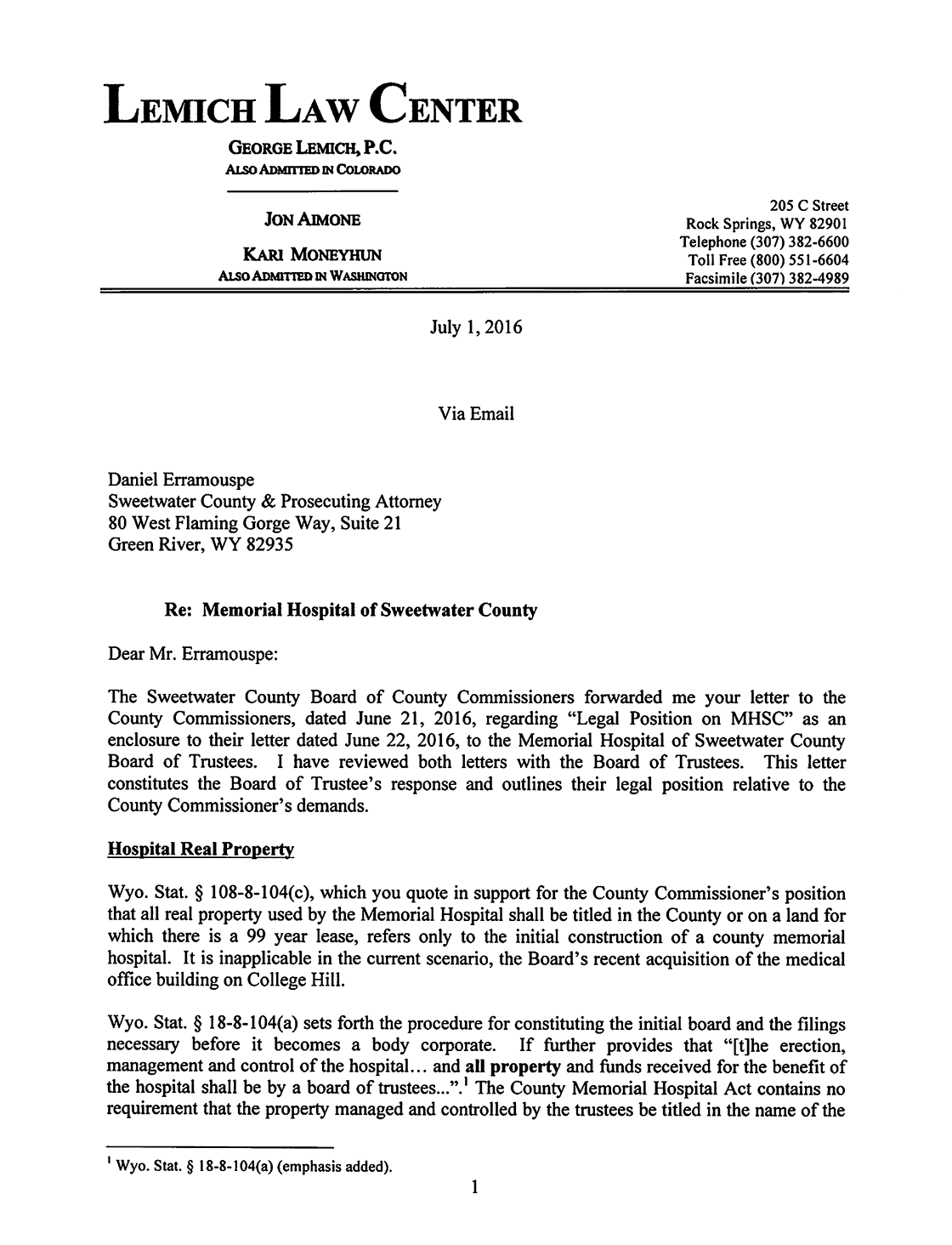
In their response, the MHSC Board states that the provision stating that the property used for a Memorial Hospital must be owned or leased to the County only refers to initial construction.
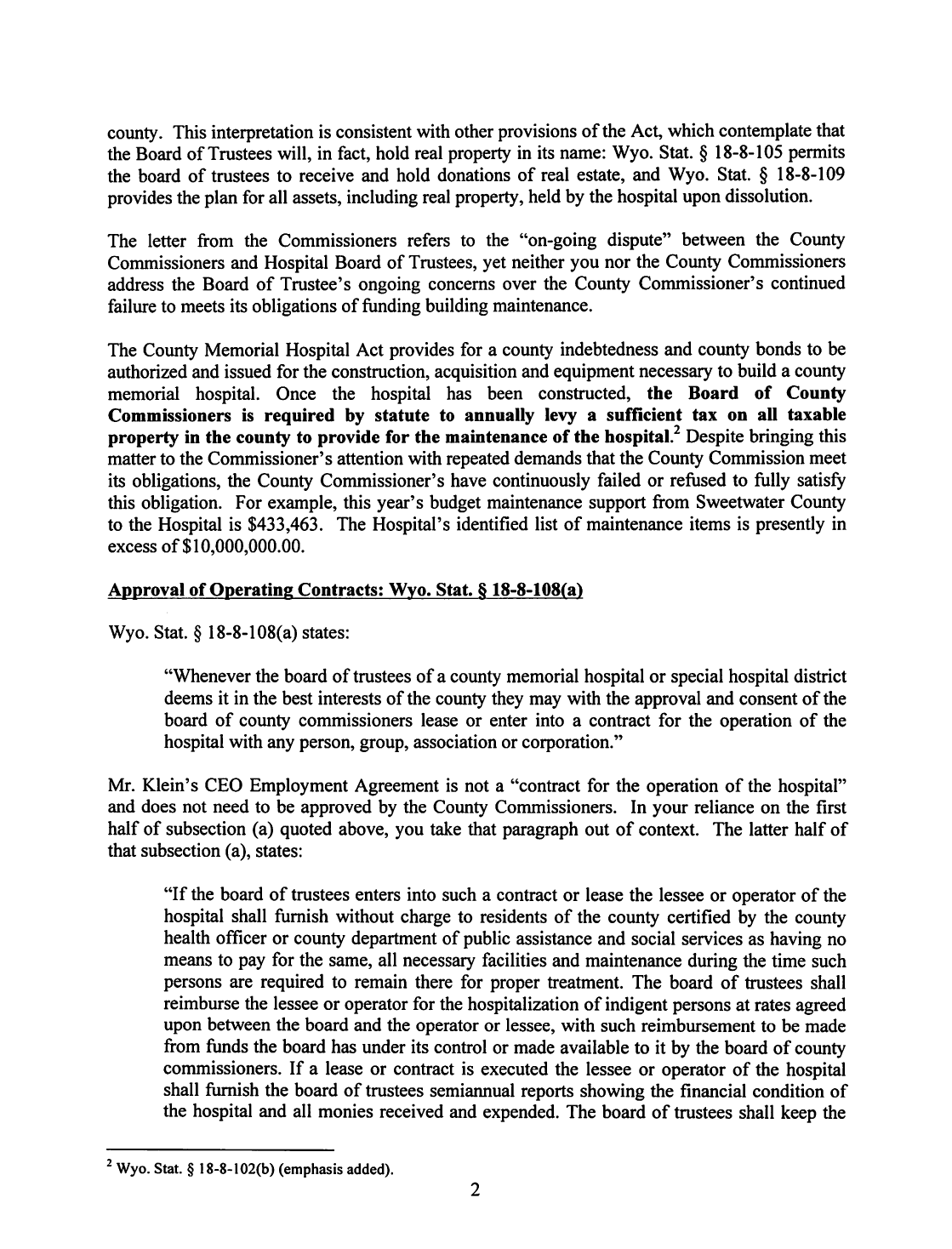
The letter also challenges the County on what the MHSC board calls unpaid maintenance money. According to the letter the hospital has identified in excess of $10,000,000 in maintenance items that have not been met by the County.
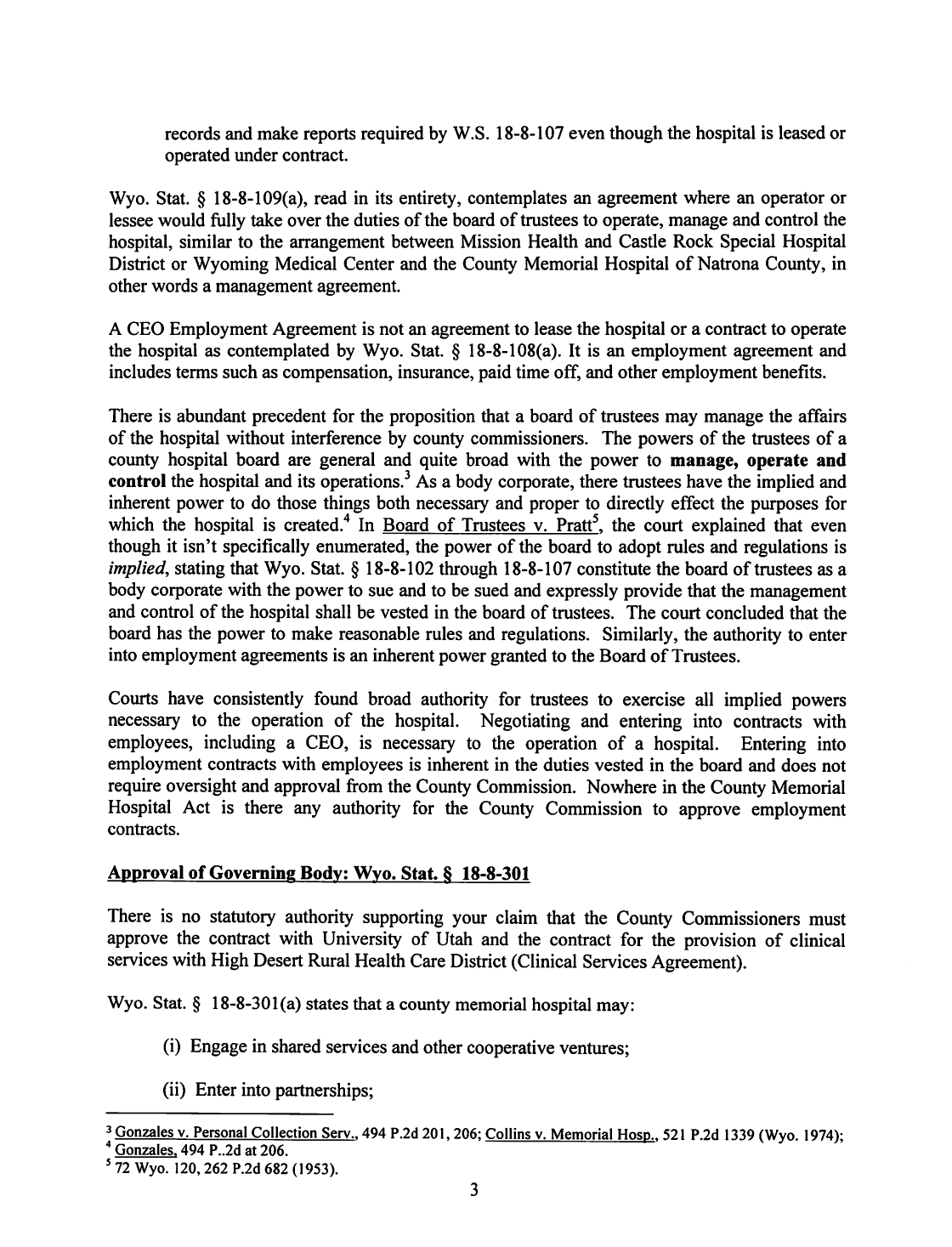
On the topic of CEO Gerry Klein’s Employment Agreement, the letter states that the contract is not for “operation of the hospital” and therefore doesn’t need the approval of the County Commissioners.
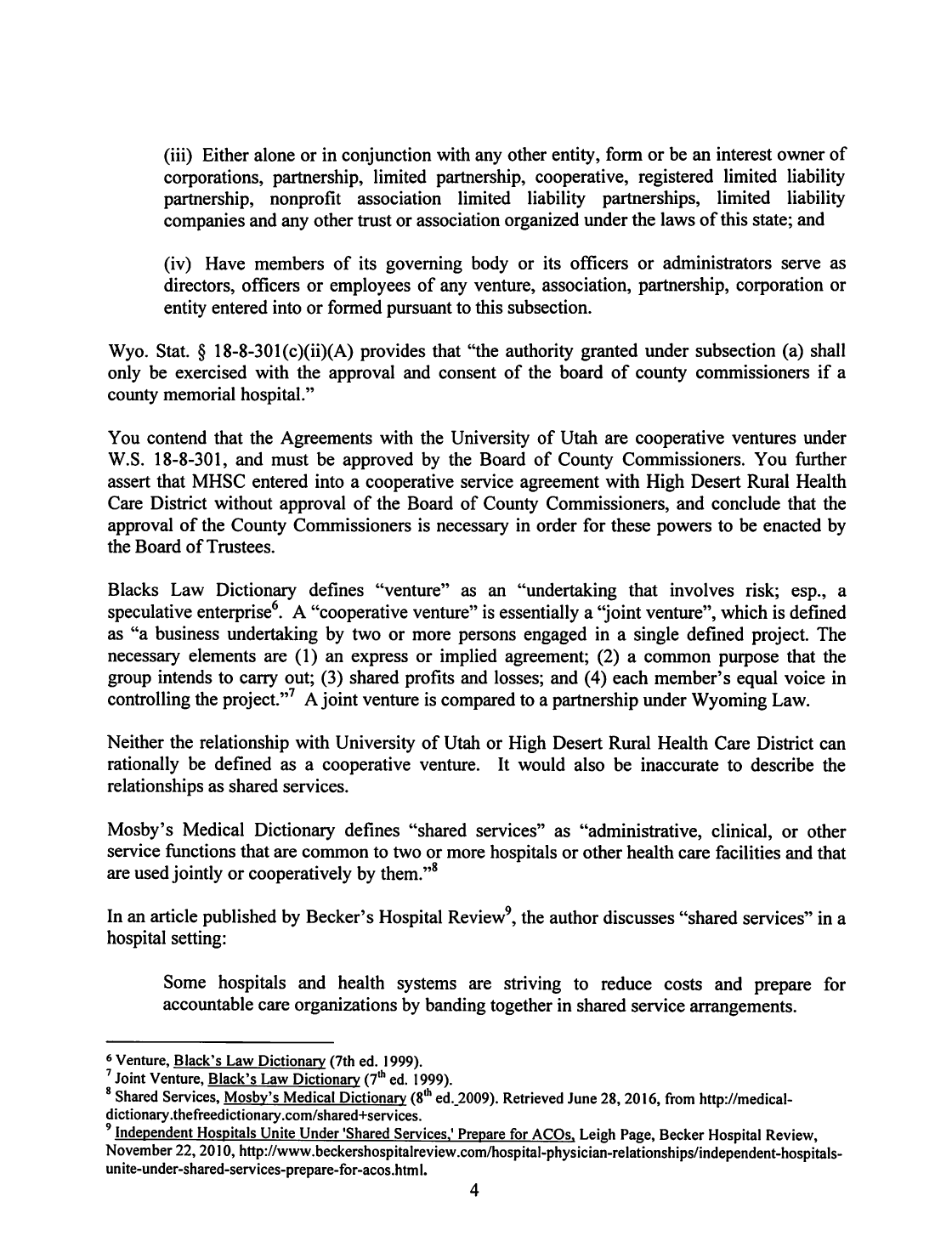
Lemich also claims there is no supporting claim that the County Commissioners must approve contracts with the University of Utah and High Desert Rural Health Care District. Lemich writes that the hospital may engage in shared services and cooperative ventures on their own authority and seeks to characterize the agreements in that light.
Lemich also states that the hospital’s subcommittees do not constitute a quorum of the governing body and therefore are not required to be open to the public.
In closing, Lemich cites what the MHSC board considers unpaid mandated funding obligations on the part of the County. These include, medical care for County prisoners and Title 25 cost for the mentally ill. Lemich also writes that the arguments put forward by the County Attorney are “penned to support the agenda of a certain Commissioners and are not consistent with the reality of the law.”
THE FOLLOWING IS THE RESPONSE